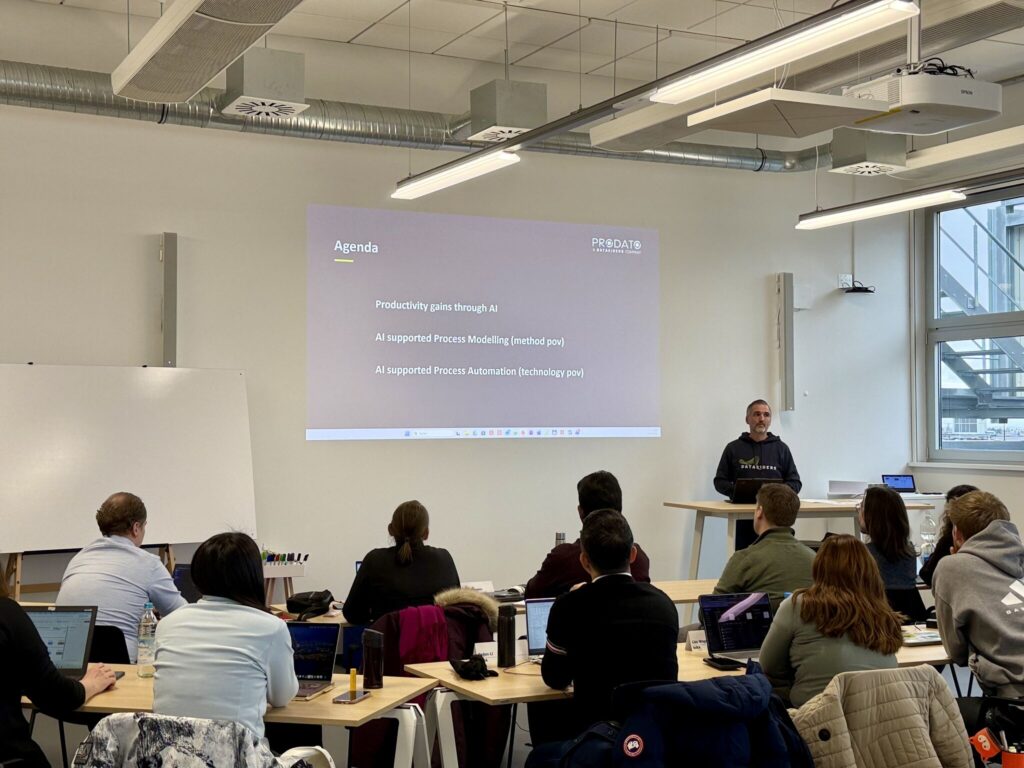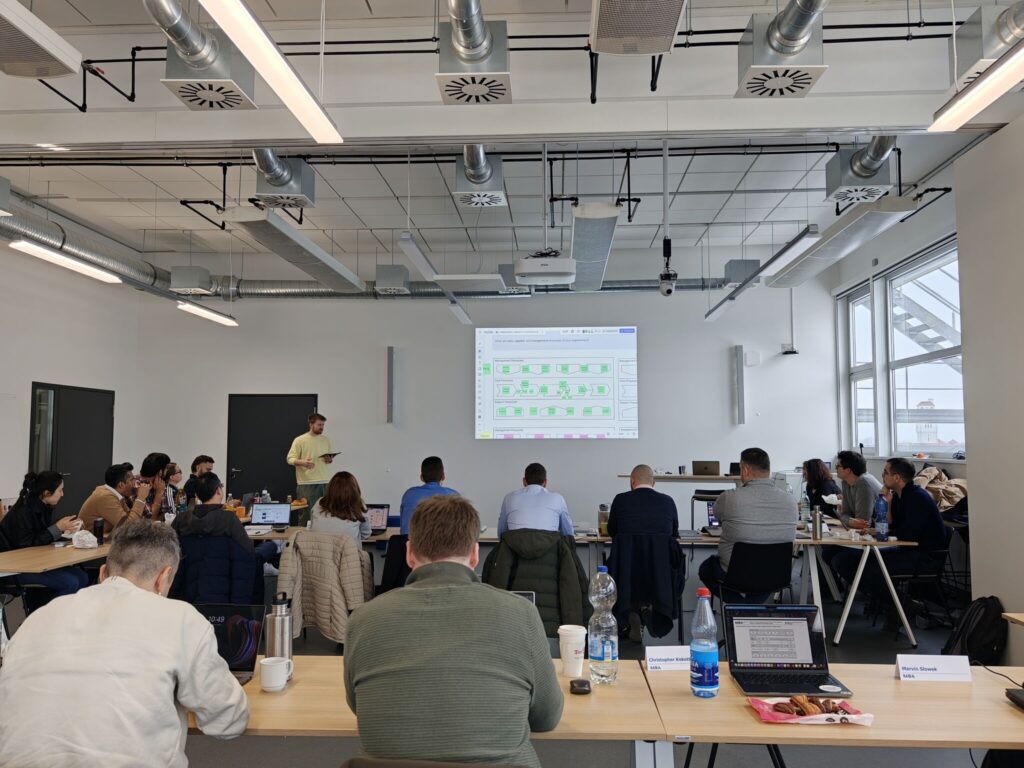
How far will agentic AI (read: agent‑based LLMs) really bend the BPM curve? That question dominated our MBA module “Digital Processes & Services” at FAU WiSo. We took the deliberately cautious seat; opposite many of our students who already operate as AI professionals.
Kudos to our industry contributors: Andreas Dietrich and Felix Lammermann (PRODATO – A DATACIDERS COMPANY), who cleanly separated two arenas:
– AI‑assisted Process Modeling (method POV)
– AI‑assisted Process Automation (technology POV)
On modeling, we reached quick consensus: LLMs are force multipliers: auto‑generating BPMN drafts, co‑facilitating interviews and workshops, and mining documents to elicit process knowledge. BPMN is, after all, a language. And LLMs are native speakers.
Execution is more contentious. We worry about burn‑rate projects that fine‑tune models and spray‑and‑pray across arbitrary processes, with “success” proxied by usage charts. That’s how we replay the shiny‑dashboard era of the 2010s “digitalization“ initiatives – while, Germany’s hourly labor productivity in the same time has largely flatlined or declined.
Yes, agentic AI will turbocharge text‑centric tasks. But processes are normative designs: they encode strategy into collective behavior. End‑to‑end efficacy, not feature velocity, must be the yardstick. Peter Mertens’ north star remains salient: “sinnhafte Vollautomation” (meaningful, purpose‑led full automation).
And of course, there are also compelling examples of AI use in processes: Prodato, as a software house, sits on the frontline of these shifts, and Moh Ghadban (MediaMarktSaturn, Data & AI Transformation) shared a plethora of initiatives, from E2E gains in customer service to in‑store digital services that reinforce a brick‑and‑mortar strategy.
Your take: will (agentic) AI truly transform business processes and truly move the needle on enterprise goals?